Arif was nine years old, and for eight months he had been careful not to complain.
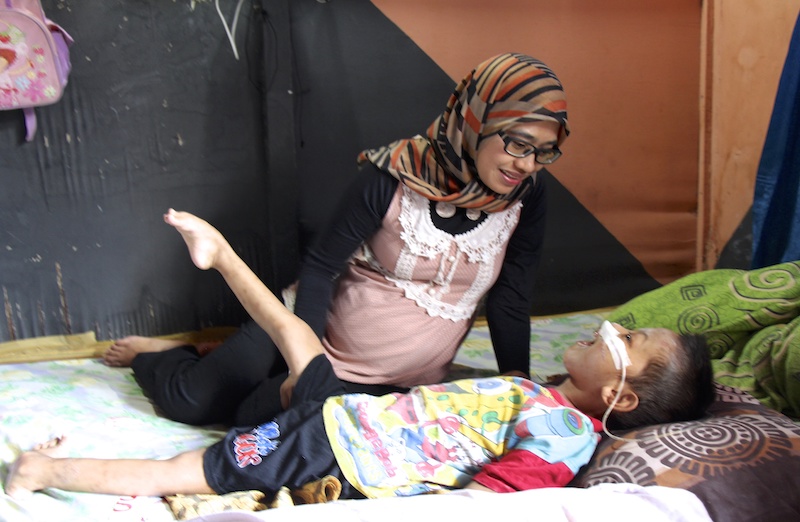
His mother noticed it first in how he sat — always leaning to one side, always finding a reason not to stand up. When the hospital sent them home between treatment cycles, nobody explained what to do about the nights, when the pain arrived and there was nothing to give him but a wet cloth and a hand to hold.
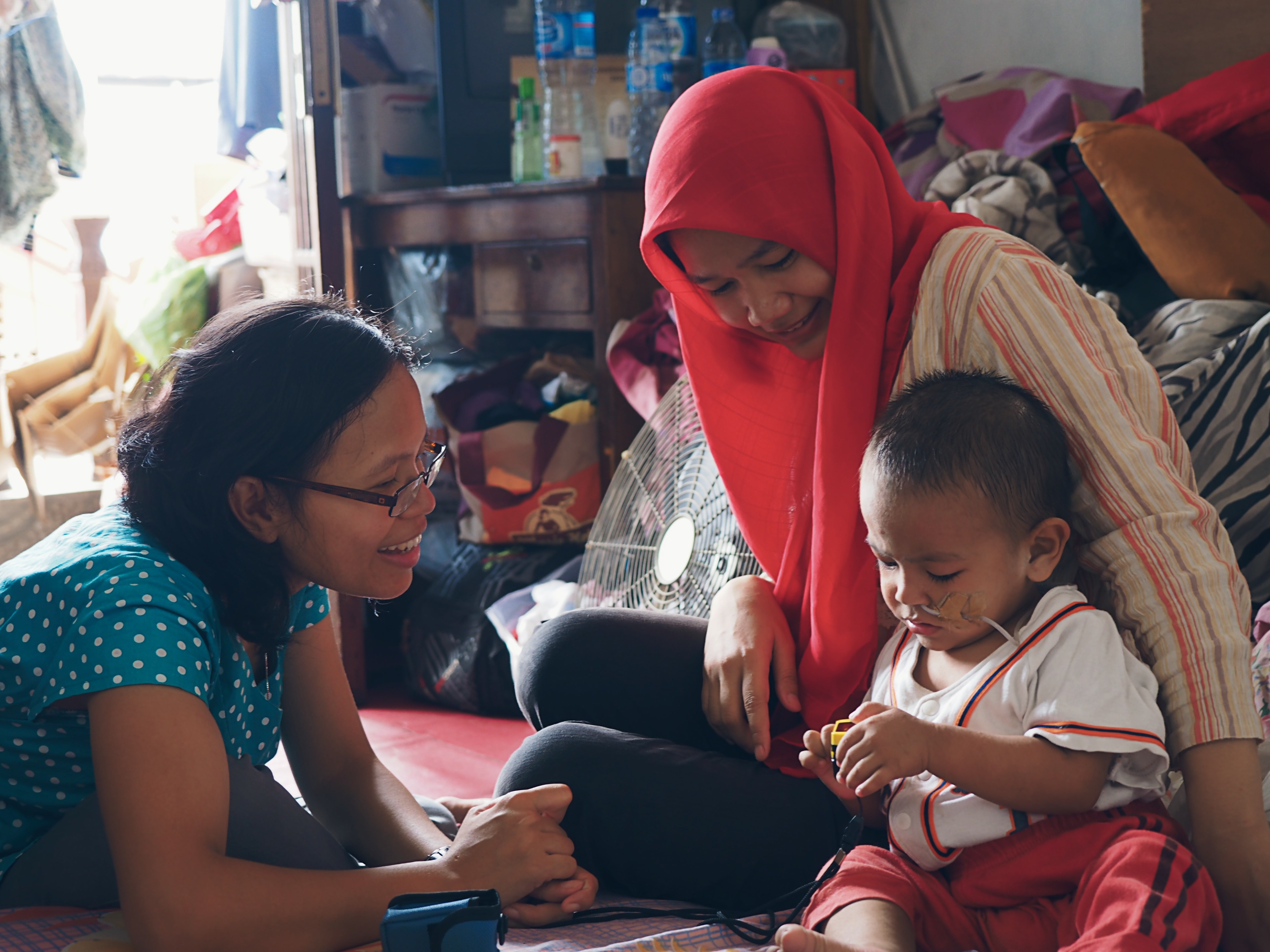
A nurse at the clinic made a referral to Rachel House. Two days later, one of our palliative care nurses took a motorbike, then a walk down three alleys, and knocked on the door of a rented room in East Jakarta.
What the first visit looked like
The first visit is mostly listening. Where does it hurt, and when? What has the family already tried? What is the mother most afraid of? Only then does the assessment begin — and with a child, that means asking in a language they can answer, often with a drawing or a set of faces rather than a number.
Arif’s pain plan was adjusted three times over the following fortnight. His mother learned to give the medication on a schedule rather than waiting for the crying to start, which is the single change that most often transforms a household’s nights.
“For eight months he had not asked for anything. Then one morning he asked for his uniform.”
The uniform
He was not well enough for a full school day, and everyone knew it. He went for two hours, sat with his friends, and came home tired in the ordinary way that children are tired. His mother folded the uniform that evening and put it where he could see it.
Palliative care does not make a child’s illness disappear. What it does is give back the hours in between — the meals, the drawings, the arguments with a sister, the mornings. For a family living inside a diagnosis, those hours are not small.
Where the family is now
[Replace with the current status of the family, if they have consented to share it. Do not publish clinical details or identifying information without written permission.]
A note on privacy. Rachel House does not publish the names, photographs or medical records of the children in our care without the informed consent of their parents or guardians. Details in this story have been changed to protect the family.
Share this story